
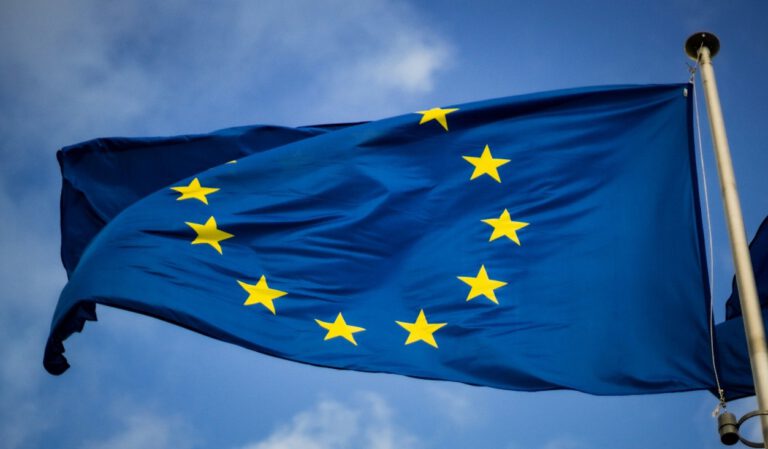
In the face of growing climate change related challenges and resource scarcity, the European Union has placed the bioeconomy at the heart of its transition toward a sustainable, circular future. Central to this vision is the valorisation of marine biomass as a renewable, low-impact resource. The PROTEUS project is one of several flagship initiatives within this landscape, pioneering the development of an industrial scale biorefinery dedicated to maximising biomass utilisation of Laminaria hyperborea.
Key Initiatives
Funded under the Circular Bio-based Europe Joint Undertaking (CBE JU), PROTEUS is a part of a strategic response to multiple EU policy frameworks and initiatives, including the European Green Deal, the Mission ‘Restore our Ocean and Waters by 2030’, the EC Communication Towards a Strong and Sustainable EU Algae Sector, the updated EU Bioeconomy Strategy and Action Plan. By demonstrating sustainable processing of marine biomass, PROTEUS not only advances scientific and industrial capabilities but also contributes directly to the EU’s goals for climate neutrality, biodiversity protection, and regional resilience.
Read below to which key initiatives PROTEUS contributes on Europe’s journey toward a thriving blue bioeconomy:
The CBE JU is a Public–Private Partnership (PPP) between the European Union and the Bio-based Industries Consortium (BIC), successor to BBI JU, with a €2 billion budget aiming to advance the European circular bioeconomy by funding outstanding projects. The main goals of the CBE JU are:
- Accelerate the innovation process and development of bio-based innovative solutions
- Accelerate market deployment of the existing mature and innovative bio-based solutions
- Ensure a high level of environmental performance of bio-based industrial systems
PROTEUS contributes to the wider objectives of the CBE JU, accelerating the commissioning and optimisation of the flexible biorefinery and development of downstream bio-based ingredients. Successful commercial deployment of the PROTEUS concept will enable rapid deployment close to marine biomass sources and create new jobs in onshore biorefineries.
The European Green Deal comprises a variety of measures aimed at transforming the EU into a modern, resource-efficient and competitive economy. It aims to cut emissions by at least 50% by 2030, rising towards 55%, pushing forward a clean transition that protects people and planet, is economically sound and socially fair.
By improving the use of alternative biobased materials, replacing oil-based products and reducing the ecological footprint on our industrial production, PROTEUS directly contributes to these ambitious goals.
This Mission addresses one of the most urgent challenges: restoring the health of our oceans, seas and inland waters by 2030. It adopts a comprehensive approach, combining research and innovation, public engagement and investments to protect and restore ecosystems and biodiversity, combat and eliminate pollution, and make the sustainable blue economy carbon-neutral and circular.
PROTEUS reduces ocean pollution by removing formaldehyde from the on-vessel processing of harvested algae and eliminates damage to the seabed caused by current dredging techniques, thus maintaining seabed habitats and biodiversity.
In November 2022, the European Commission adopted the Communication Towards a strong and sustainable algae sector. This initiative highlights the importance of algae and other marine biomass as renewable resources in Europe. By replacing fossil-based products, algae can provide sustainable alternatives for food and feed, pharmaceuticals, nutraceuticals, plant biostimulants, bio-based packaging, biofuels, cosmetics and other products.
The Communication sets out targeted actions to scale up algae cultivation and production across the EU and to develop markets for both food and non-food algae applications. It also emphasizes algae’s role as a source of alternative protein, which is essential for feeding a growing global population in a sustainable way.
PROTEUS contributes to these goals by demonstrating the commercial viability of a new harvesting vessel and onshore, flexible biorefinery concept. This approach increases biomass yield and enables the creation of ingredients for food, feed and cosmetics.
The EU Bioeconomy Strategy, updated in 2018, aims to accelerate the transition to a sustainable and circular bioeconomy. It sets five main objectives:
- Ensure food and nutrition security
- Manage natural resources sustainably
- Reduce dependence on non-renewable resources
- Limit and adapt to climate change, and
- Strengthen European competitiveness and create jobs.
PROTEUS contributes directly to these objectives by increasing food security through scaled production of nutrition ingredients from L. hyperborea and by creating bio-based substitutes for fossil-based materials. The project also addresses sustainability by improving resource efficiency and reducing environmental impacts in marine biomass harvesting. By engaging stakeholders and sharing best practices, PROTEUS supports biodiversity protection and helps build resilient regional economies.
About the Circular Bio-Based Europe Joint Undertaking
The project is supported by the Ciruclar Bio-based Europe Joint Undertaking and its members. The CBE JU is a €2 billion partnership between the European Union and the Bio-based Industries Consortium, funding projects to advance circular bio-based industries in Europe.
Funded by the European Union. Views and opinions expressed are however those of the author(s) only and do not necessarily reflect those of the European Union or the CBE JU. Neither the European Union nor the CBE JU can be held responsible for them.